
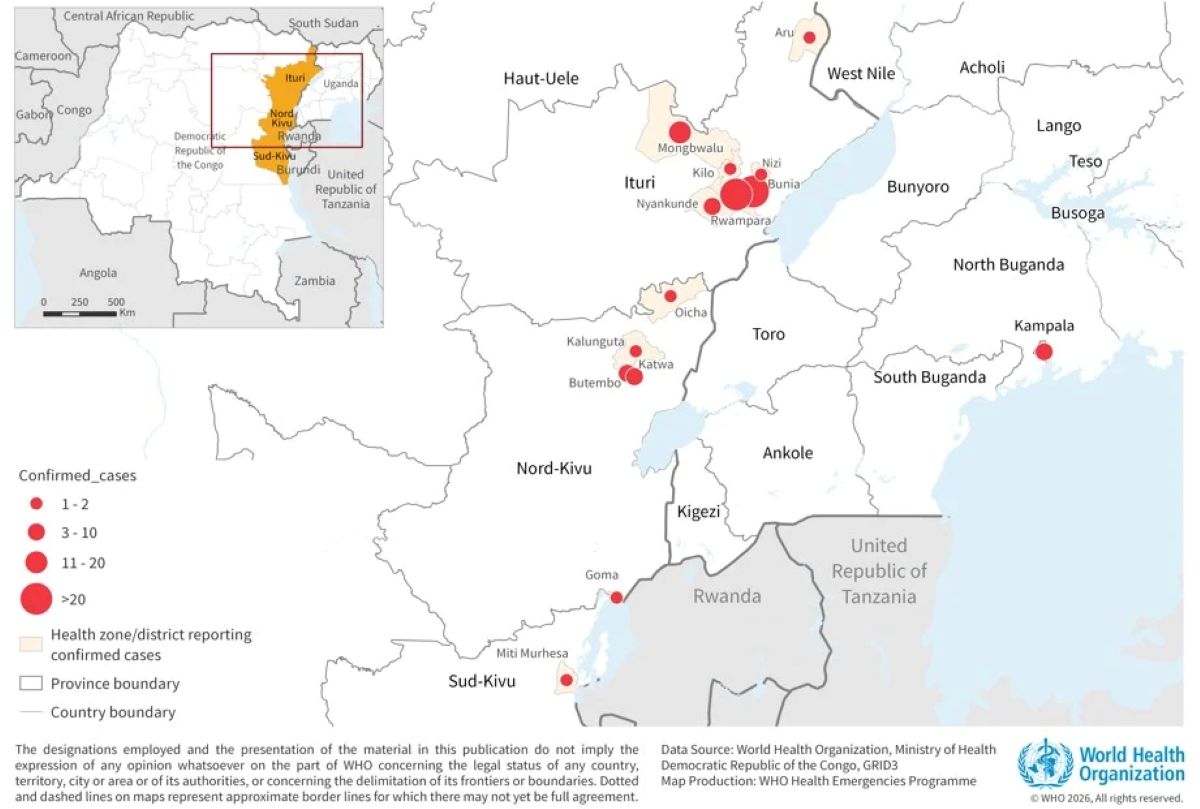
Ebola Current Situation: What is Happening in Africa?
The ongoing Ebola outbreak caused by the Bundibugyo virus continues to spread in the Democratic Republic of the Congo (DRC) and Uganda, prompting international concern.
According to the World Health Organization (WHO), as of 29 May 2026, a total of 134 confirmed Ebola cases and 18 confirmed deaths have been recorded across the two countries.
In addition, health authorities in the DRC have reported 906 suspected cases and 223 suspected deaths, while Uganda has confirmed nine cases, including one death.
The outbreak remains concentrated in eastern DRC, particularly in Ituri Province, which accounts for nearly 90 per cent of confirmed cases. Cases have also been reported in North Kivu and South Kivu provinces.
Health workers have been significantly affected, with at least 16 infections among healthcare personnel recorded in the DRC.
WHO also confirmed that a medical doctor from the United States who treated Ebola patients in the DRC contracted the disease and was subsequently transferred to Germany for specialized care.
Public health experts are particularly concerned about ongoing cross-border movement between the DRC and Uganda, as well as challenges such as insecurity, attacks on health facilities, community resistance and difficulties in tracing contacts.
WHO, national authorities and international partners are deploying rapid response teams, strengthening surveillance, expanding laboratory testing, establishing treatment centres and intensifying community engagement efforts to contain the outbreak.
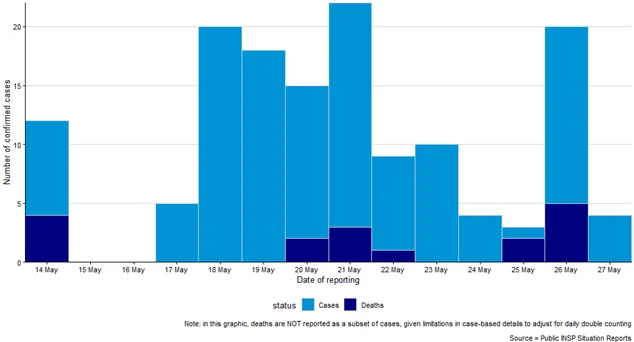
Number of confirmed cases (n=125) and deaths (n=17) by date of reporting in the Democratic Republic of the Congo as of 27 May 2026
Source: Ministry of Health, Democratic Republic of the Congo
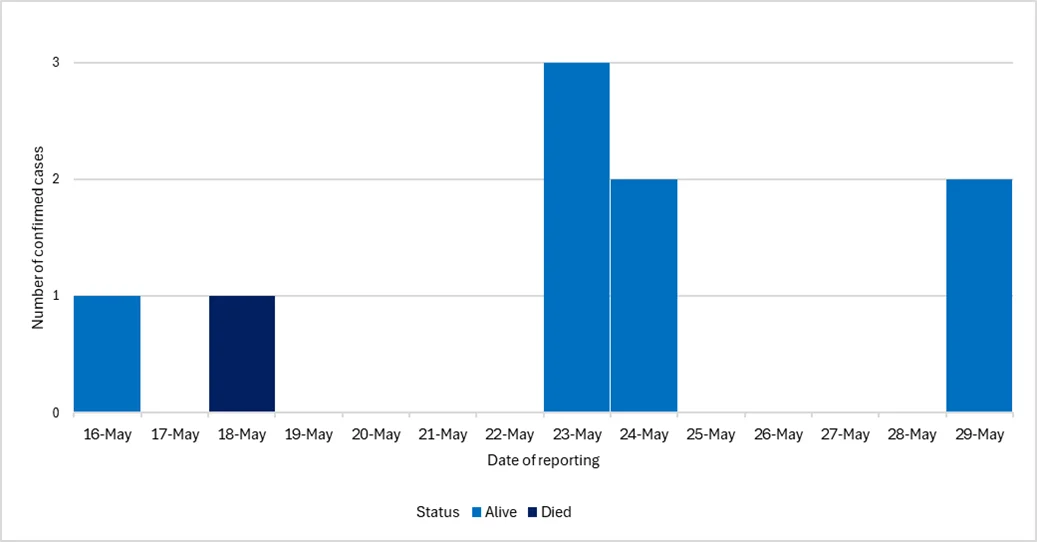
Number of confirmed cases (n=9) and deaths (n=1) by date of reporting in Uganda as of 29 May 2026
Source: Ministry of Health, Uganda
At present, Nigeria has not recorded any Ebola case linked to the outbreak.
Editor’s Note:
Ebola Virus Disease (EVD) is a severe viral illness spread through direct contact with infected body fluids. Early symptoms include fever, headache, weakness and muscle pain. Suspected cases should be reported immediately to health authorities.
About author

You might also like
Painful menstruation? See a doctor
… experts say it’ts a medical condition that requires treatment Recent studies have revealed that about 50 per cent of women above the puberty age suffer from a monthly disorder

Midwives decry poor infrastructures in Nigerian hospitals
Say hospitals need more skilled birth attendants Now, Nigeria has more male midwives The National Association of Nigerian Nurses and Midwives (NANNM) Friday, denounced the poor state of infrastructures in


More Nigerians still at risk of COVID-19 infection
…As NCDC, NIMR release Household Seroprevalence Surveys in 4 States The Nigeria Centre for Disease Control (NCDC) and Nigeria Institute for Medical Research (NIMR) among other partners on Monday released

0 Comments
No Comments Yet!
You can be first to comment this post!