
Warning Signs of Heart Failure
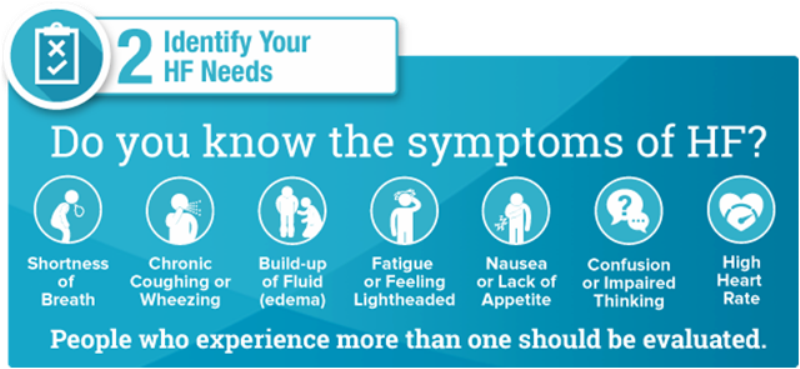
By themselves, any one sign of heart failure may not be cause for alarm. But if you have more than one of these symptoms, even if you haven’t been diagnosed with any heart problems, report them to a healthcare professional and ask for an evaluation of your heart. Congestive heart failure is a type of heart failure which requires seeking timely medical attention, although sometimes the two terms are used interchangeably.
This table lists the most common signs and symptoms, explains why they occur and describes how to recognize them.
| Sign or Symptom | People with Heart Failure May Experience… | Why It Happens | |
| Shortness of breath (also called dyspnea) | …breathlessness during activity (most commonly), at rest, or while sleeping, which may come on suddenly and wake you up. You often have difficulty breathing while lying flat and may need to prop up the upper body and head on two pillows. You often complain of waking up tired or feeling anxious and restless. | Blood “backs up” in the pulmonary veins (the vessels that return blood from the lungs to the heart) because the heart can’t keep up with the supply. This causes fluid to leak into the lungs. | |
| Persistent coughing or wheezing | …coughing that produces white or pink blood-tinged mucus. | Fluid builds up in the lungs (see above). | |
| Buildup of excess fluid in body tissues (edema) | …swelling in the feet, ankles, legs or abdomen or weight gain. You may find that your shoes feel tight. | As blood flow out of the heart slows, blood returning to the heart through the veins backs up, causing fluid to build up in the tissues. The kidneys are less able to dispose of sodium and water, also causing fluid retention in the tissues. | |
| Tiredness, fatigue | …a tired feeling all the time and difficulty with everyday activities, such as shopping, climbing stairs, carrying groceries or walking. | The heart can’t pump enough blood to meet the needs of body tissues. The body diverts blood away from less vital organs, particularly muscles in the limbs, and sends it to the heart and brain. | |
| Lack of appetite, nausea | …a feeling of being full or sick to your stomach. | The digestive system receives less blood, causing problems with digestion. | |
| Confusion, impaired thinking | …memory loss and feelings of disorientation. A caregiver or relative may notice this first. | Changing levels of certain substances in the blood, such as sodium, can cause confusion. | |
| Increased heart rate | …heart palpitations, which feel like your heart is racing or throbbing.
|
To “make up for” the loss in pumping capacity, the heart beats faster. |
PLEASE SEE A DOCTOR IMMEDIATELY IF YOU HAVE MORE THAN ONE OF THESE SYMPTOMS
Courtesy: American Heart Association
About author

You might also like

Risks of diabetes in children
Q: What are the risks of diabetes in children? A: The frequency of diabetes is rising around the world, and studies are showing children are at increasing risk of developing
Poor diet, hypertension now leading risk factors for early death
A new study on global burden of disease has revealed that poor diet and high blood pressure are now the leading cause of early death worldwide. According to the results


USAID, Kebbi develop 5-year plan for health sector
Stakeholders in Kebbi State, in partnership with the United States Agency for International Development (USAID) State2State, have ratified a five-year development plan for the health sector. At a four-day workshop

0 Comments
No Comments Yet!
You can be first to comment this post!