
Ebola virus fragments stays in survivors’ semen for at least nine months – WHO
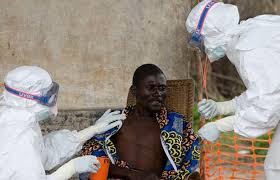
• An Ebola patient receiving medical attention
Preliminary results of a study into persistence of Ebola virus in body fluids show that some men still produce semen samples that test positive for Ebola virus nine months after onset of symptoms.
The report, published last week in the New England Journal of Medicine, provides the first results of a long-term study being jointly conducted by the Sierra Leone Ministry of Health and Sanitation, Sierra Leone Ministry of Defence, the World Health Organization and the U.S. Centers for Disease Control and Prevention.
“Sierra Leone is committed to getting to zero cases and to taking care of our survivors, and part of that effort includes understanding how survivors may be affected after their initial recovery,” said Amara Jambai, M.D., M.Sc., Deputy Chief Medical Officer for the Sierra Leone Ministry of Health and Sanitation. “Survivors are to be commended for contributing to the studies that help us understand how long the virus may persist in semen.”
The first phase of this study has focused on testing for Ebola virus in semen because of past research showing persistence in that body fluid. Better understanding of viral persistence in semen is important for supporting survivors to recover and to move forward with their lives.
“These results come at a critically important time, reminding us that while Ebola case numbers continue to plummet, Ebola survivors and their families continue to struggle with the effects of the disease. This study provides further evidence that survivors need continued, substantial support for the next 6 to 12 months to meet these challenges and to ensure their partners are not exposed to potential virus,” said Bruce Aylward, WHO Director-General’s Special Representative on the Ebola Response.
Ninety three men over the age of 18 from Freetown, Sierra Leone, provided a semen sample that was tested to detect the presence of Ebola virus genetic material. The men enrolled in the study between two and 10 months after their illness began. For men who were tested in the first three months after their illness began, all were positive (9/9; 100 percent). More than half of men (26/40; 65 percent) who were tested between four to six months after their illness began were positive, while one quarter (11/43; 26 percent) of those tested between seven to nine months after their illness began also tested positive. The men were given their test results along with counseling and condoms.
“EVD survivors who volunteered for this study are doing something good for themselves and their families and are continuing to contribute to the fight against Ebola and our knowledge about this disease,” said Yusuf Kabba, National President of the Sierra Leone Association of Ebola Survivors.
Why some study participants had cleared the fragments of Ebola virus from semen earlier than others remains unclear. The U.S. Centers for Disease Control and Prevention in Atlanta is conducting further tests of the samples to determine if the virus is live and potentially infectious.
“Ebola survivors face an increasing number of recognized health complications,” said CDC Director Tom Frieden, M.D., M.P.H. “This study provides important new information about the persistence of Ebola virus in semen and helps us make recommendations to survivors and their loved ones to help them stay healthy.”
Until more is known, the more than 8000 male Ebola survivors across the three countries need appropriate education, counselling and regular testing so they know whether Ebola virus persists in their semen; and the measures they should take to prevent potential exposure of their partners to the virus.
Until a male Ebola survivor’s semen has twice tested negative, WHO recommended that he should abstain from all types of sex or use condoms when engaging in sexual activity. Hands should be washed after any physical contact with semen.



0 Comments
No Comments Yet!
You can be first to comment this post!