


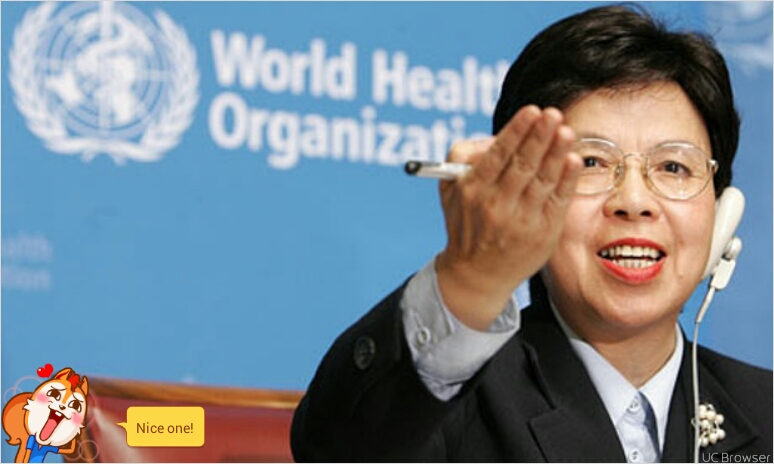
WHO DG
GENEVA – As 2016 begins, the World Health Organization (WHO) has called on countries to begin efforts to achieve the 17 SDGs over the next 15 years, (2030). In a release to usher in the SDG, the WHO said the 17 SDG’s are aimed at ending poverty, hunger and assuring gender equally while building a life of dignity for all over the next 15 years.
Last year witnessed the end of the 15-year cycle of the anti-poverty Millennium Development Goals (MDGs).
“The seventeen Sustainable Development Goals (SDGs) are our shared vision of humanity and a social contract between the world’s leaders and the people,” UN Secretary-General Ban Ki-moon said, of the 2030 Agenda for Sustainable Development adopted unanimously by 193 Heads of State and other top leaders at a summit at UN Headquarters in New York in September.
“The 17 goals and 169 targets are a to-do list for people and planet, and a blueprint for success, to wipe out poverty, fight inequality and tackle climate change over the next 15 years”, he added.
The goals address the needs of people in both developed and developing countries, emphasising that no one should be left behind. Broad and ambitious in scope, the agenda addresses the three dimensions of sustainable development –social, economic and environmental, as well as important aspects related to peace, justice and effective institutions.
The mobilisation of means of implementation, including financial resources, technology development and transfer and capacity-building, as well as the role of partnerships, are also acknowledged as critical.
The 17 SDGs build on the eight MDGs, which specifically sought by 2015 — to eradicate extreme poverty and hunger; achieve universal primary education; promote gender equality and empower women; reduce child mortality; improve maternal health; combat HIV/AIDS, malaria and other diseases; ensure environmental sustainability; and develop a global partnership for development.
While the MDGs have accomplished a lot, progress has been uneven across regions and countries, leaving millions of people behind, especially the poorest and those disadvantaged due to sex, age, disability, ethnicity or geographic location.
The SDGs are expected to plug the holes left by the MDGs and accomplish more.
They stress everything from zero poverty, zero hunger, good health, quality education, gender equality, clean water and sanitation, and affordable clean energy, to decent work and economic growth, innovation, reducing inequalities, sustainable cities, responsible consumption, climate action, unpolluted oceans and land and partnerships to achieve the goals. The Paris Conference on climate change in December is seen by many as the first test of political will to implement the 2030 Agenda for Sustainable Development.
“The Paris Agreement is a triumph for people, the planet, and for multilateralism. For the first time, every country in the world has pledged to curb their emissions, strengthen resilience and act internationally and domestically to address climate change. By addressing climate change we are advancing the 2030 Agenda for Sustainable Development,” Mr. Ban said.
Turning this vision into reality is primarily the responsibility of countries, but it will also require new partnerships and international solidarity. Everyone has a stake and everyone has a contribution to make. Reviews of progress will need to be undertaken regularly in each country, involving civil society, business and representatives of various interest groups.
Leave a Comment
