

-
NCDC strengthens surveillance after imported infection linked to DRC outbreak
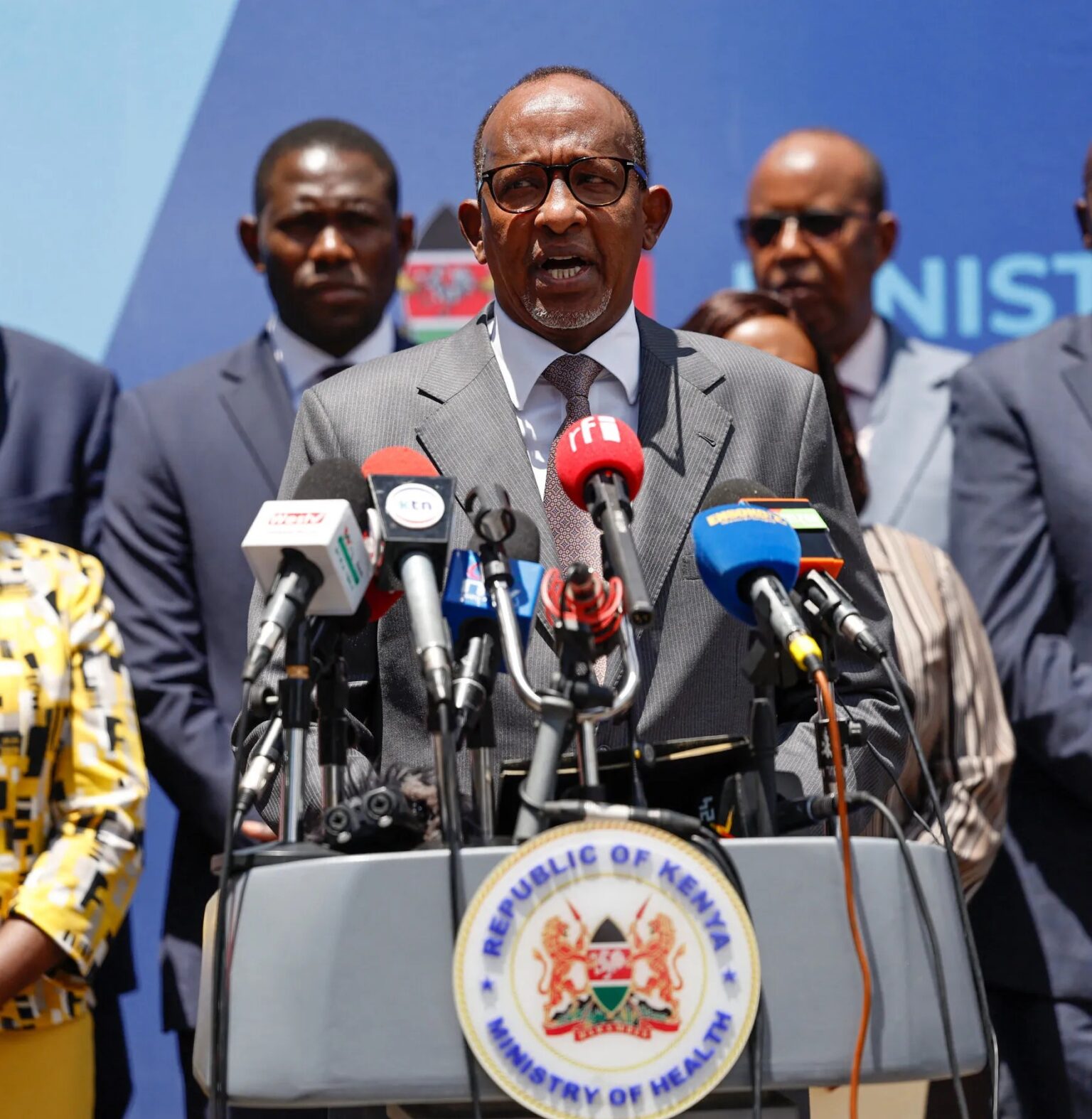
Nigeria has stepped up surveillance and preparedness measures following the confirmation of Ebola virus disease in Kenya, as health authorities in the East African country work to contain a second infection linked to an imported case.
The Nigeria Centre for Disease Control and Prevention (NCDC) said the development highlights the continuing risk of international importation of Ebola through travel and population movement, particularly because the Kenyan infections are linked to the ongoing outbreak in the Democratic Republic of Congo (DRC).
Kenya confirmed its first case on October 6 after a Kenyan man who had been living in the DRC travelled by road from the DRC to Kampala, Uganda, and subsequently flew to Nairobi.
He was isolated and tested positive for Bundibugyo virus, a species of Ebola virus. He later died in hospital.
A second case has since been identified in Kenya. According to the World Health Organisation (WHO), the patient, a 39-year-old man, was a relative of the first patient and had been among contacts placed in quarantine.
He developed symptoms on October 13 and subsequently tested positive.
The development has prompted an intensified public health response in Kenya, with authorities tracing and monitoring people who may have been exposed to the virus.
Kenya casts a wide net
WHO said more than 40 contacts linked to Kenya’s first Ebola case had been identified. They included airline passengers and crew, airport cleaners and workers, baggage handlers, immigration officials, healthcare personnel and family members.
Most were placed in quarantine, while some lower-risk contacts were allowed to self-quarantine under monitoring.
Health authorities have also been trying to locate six passengers who have been difficult to reach because they have foreign telephone numbers.
WHO Representative in Kenya, Dr Neema Rusibamayila Kimambo, commended the Kenyan authorities for identifying and quarantining contacts.
“We all have a role to play,” she said, stressing that containing Ebola would require the involvement of government, health partners and the wider public.
The WHO has continued to support Kenya’s response, including providing infection prevention and control and laboratory supplies valued at about $70,000.
More than 4,000 health workers have also been trained, including personnel involved in screening travellers at points of entry.
Nigeria says no confirmed case
For Nigeria, the immediate message from the NCDC is that there is no confirmed Ebola case in the country as of October 6.
However, the agency has heightened its surveillance and preparedness activities in response to the developments in Kenya and the continuing Ebola outbreak in the DRC.
The NCDC said it is working with the Federal Ministry of Health and Social Welfare, Port Health Services, state governments and other partners to strengthen preparedness.
Measures include early detection, isolation and referral of suspected cases, laboratory diagnosis, infection prevention and control, contact tracing and risk communication.
The agency also said Nigeria had conducted a National Ebola Preparedness Tabletop Simulation exercise to test its response arrangements and identify gaps requiring attention.
It is now reviewing the risk to Nigeria and its existing preparedness measures, with plans to strengthen them where necessary.
Why Nigeria should remain vigilant
Nigeria’s geographical distance from the DRC does not eliminate the possibility of an imported case.
The experience in Kenya illustrates how quickly population movement across countries can turn an outbreak in one part of Africa into a concern for other countries.
The first Kenyan patient travelled through Uganda before arriving in Nairobi. This underscores the importance of surveillance not only within countries experiencing an outbreak but also at international airports, land borders and other points of entry.
For Nigeria, this makes the work of Port Health Services and other surveillance teams particularly important.
The Kenyan experience also demonstrates the value of rapid contact tracing.
Once the first case was identified, health authorities attempted to identify everyone who might have had contact with the patient — from family members and healthcare workers to airline personnel and passengers.
Such a wide-ranging response can help interrupt transmission before infections spread further into the community.
No need for panic
WHO has said there is no need at this stage for travel restrictions or closure of national borders because of the Kenyan cases.
Instead, appropriate screening and surveillance remain important.
Ebola is transmitted through contact with the bodily fluids of an infected person. Symptoms can include fever, vomiting and diarrhoea, although these may resemble illnesses such as malaria and other common infections.
The NCDC is therefore urging Nigerians to remain calm but vigilant, practise regular hand hygiene and avoid contact with the blood or bodily fluids of sick people.
People who develop compatible symptoms, particularly after travelling to an affected area or having a possible exposure, should seek medical attention promptly and disclose their travel or exposure history.
Travellers from affected areas have also been advised to monitor their health for 21 days and report symptoms or possible exposure to public health authorities.
Healthcare workers have been urged to maintain a high index of suspicion when patients present with compatible symptoms and relevant travel or exposure histories, while applying standard infection prevention and control precautions and immediately isolating suspected cases.
Lessons from Nigeria’s Ebola experience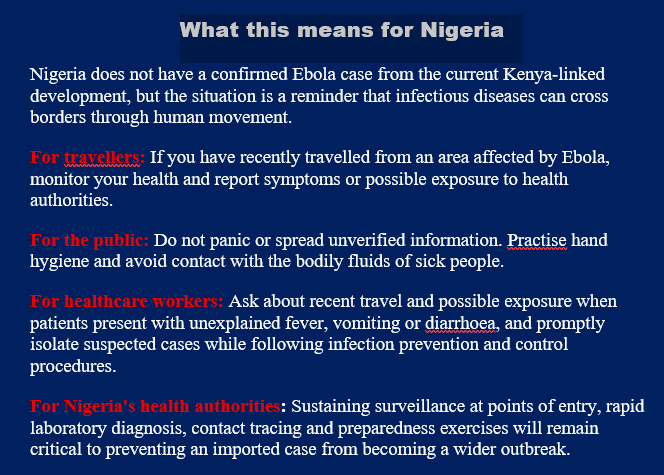
Nigeria knows from experience that preparedness matters.
The country successfully contained its 2014 Ebola outbreak after the virus was imported by an infected traveller, with rapid identification of contacts and aggressive public health measures helping to prevent widespread transmission.
That experience remains relevant as Ebola continues to pose a threat in parts of Africa.
The latest developments in Kenya therefore offer Nigeria another reminder that preparedness cannot be switched on only after a case arrives.
Surveillance, trained health workers, functioning laboratories, infection prevention and control, effective contact tracing and clear public communication all need to remain operational.
For now, there is no confirmed Ebola case in Nigeria.
But with international travel continuing to connect countries across Africa, vigilance remains the best defence.
