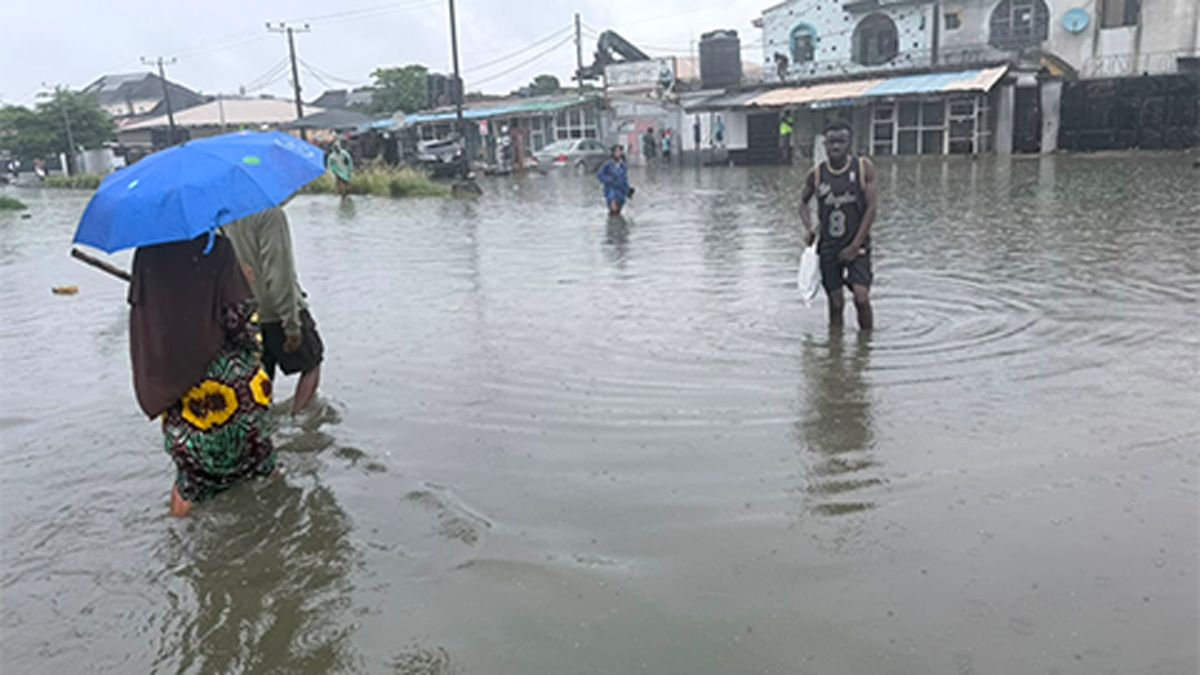

As heavy rains continue to cause flooding in parts of Lagos State, the Commissioner for Health, Prof. Akin Abayomi has urged residents to take precautions against waterborne diseases and other health hazards associated with floodwaters.
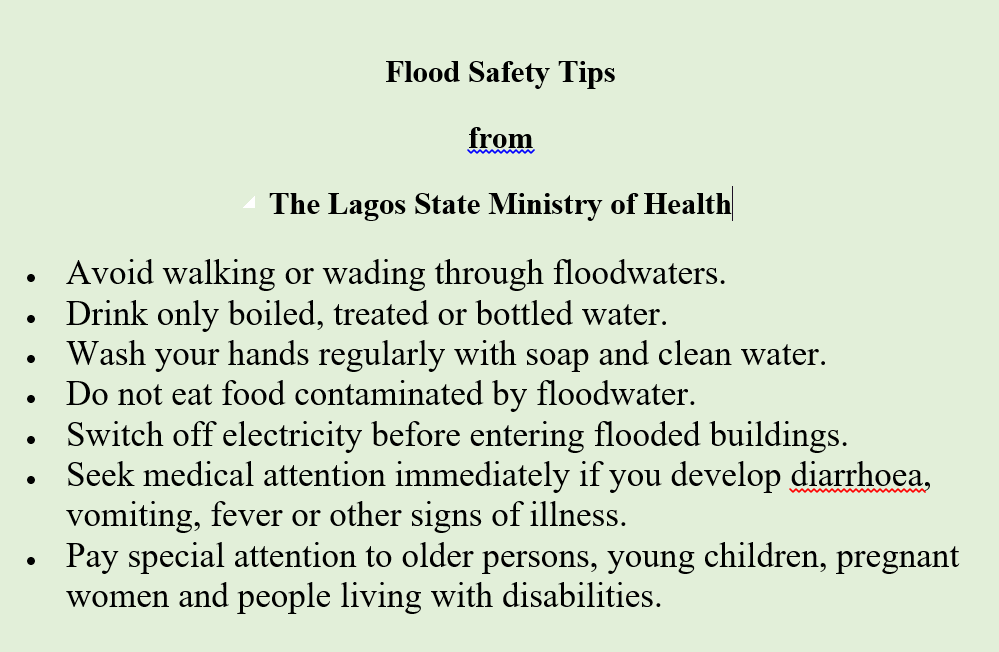
The Commissioner warned that floodwaters are often contaminated with sewage, chemicals and other pollutants, increasing the risk of cholera, typhoid fever, skin infections, injuries, snakebites and electrocution.
He advised residents to avoid contact with floodwaters whenever possible, drink only safe or treated water, maintain good hand hygiene, switch off electricity before entering flooded homes, and seek immediate medical attention if they develop symptoms such as diarrhoea, vomiting or fever.
Prof. Abayomi also described flooding as a major public health emergency, warning that its impact extends far beyond damaged roads and submerged homes to threaten lives, healthcare delivery, livelihoods and the wellbeing of vulnerable populations.
The Commissioner made the remarks after joining Governor Babajide Sanwo-Olu, Deputy Governor Dr. Obafemi Hamzat, the Commissioner for the Environment and Water Resources, and other senior government officials on an assessment visit to flood-affected communities across the state.
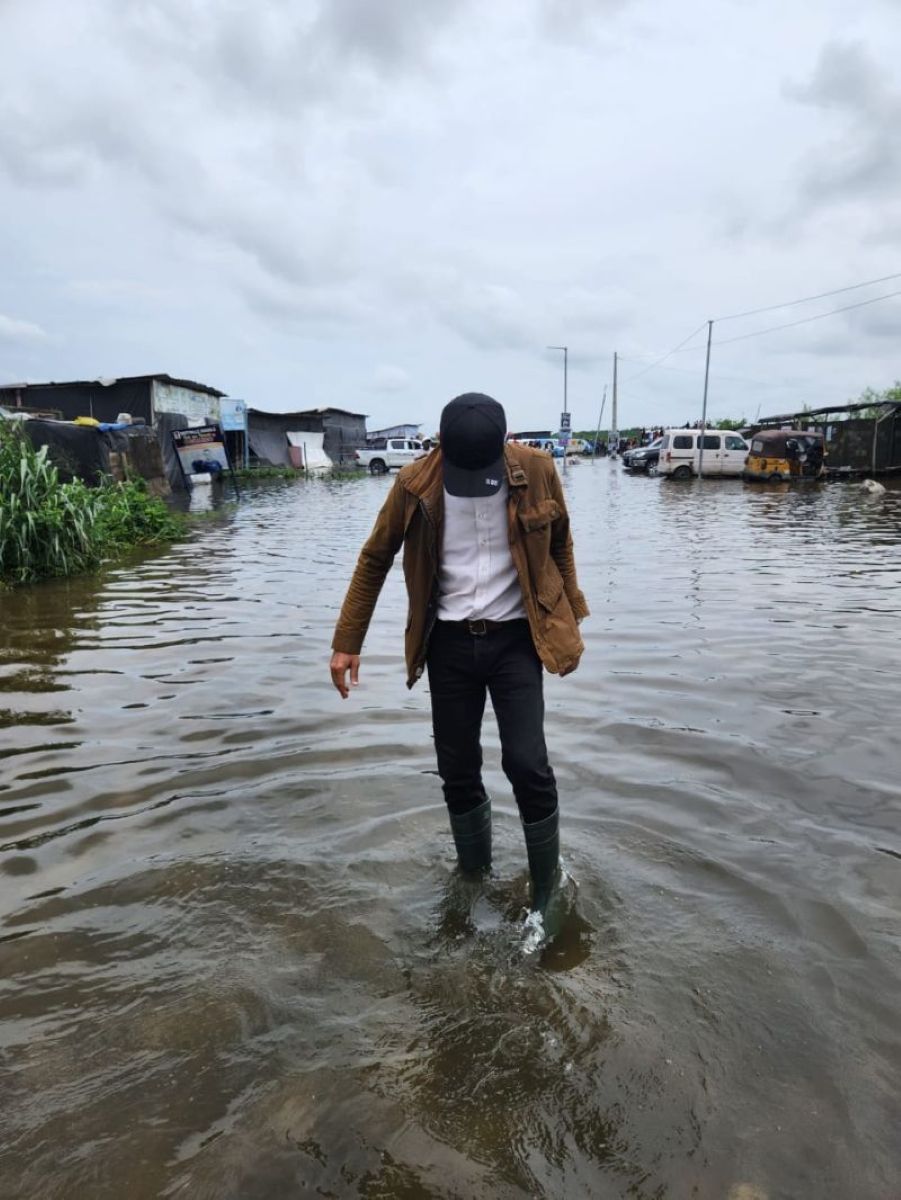
Beyond the physical dangers, the Commissioner stressed that flooding leaves many affected residents dealing with anxiety, uncertainty and emotional distress long after the floodwaters have receded.
“The impact falls hardest on those already most vulnerable, including older persons, young children, pregnant women, nursing mothers and people living with disabilities,” he said.
During the assessment tour, the Commissioner observed canoe operators transporting residents through flooded streets, particularly older persons and individuals with mobility challenges.
While commending the resilience and ingenuity of Lagos residents, he said the situation underscored the extent to which flooding disrupts everyday life and access to essential services.
To minimise the health consequences of flooding, the Commissioner said the Ministry of Health has intensified disease surveillance in affected communities, strengthened monitoring for outbreaks of waterborne diseases, promoted safe water and sanitation practices, and is working closely with other government agencies to reduce flood-related health risks.
He also disclosed that Lagos State has developed new healthcare facility designs that incorporate climate adaptation and resilience measures to withstand recurring floods and increasingly severe weather conditions.
According to him, the new facility blueprint includes elevated, low-carbon buildings with natural cooling systems constructed above projected flood levels, improved drainage systems, green roofs for storm water management and rainwater harvesting, strict infection prevention and control measures, as well as integrated solar power systems to ensure uninterrupted healthcare services during power outages.
He said the climate-smart facilities are designed to remain operational during emergencies while protecting both patients and healthcare workers for decades to come.
Prof.Abayomi emphasised that protecting public health requires more than quality healthcare services, noting that healthy communities also depend on safe and resilient environments.
“Protecting Lagos from the health impacts of flooding requires government, communities and residents to work together to build a safer, healthier and more resilient city,” he said.