
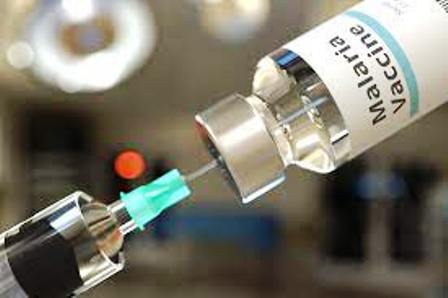
NAFDAC approves R21 malaria vaccine
-
Becomes 2nd country to grant approval

Prof. Mojisola Adeyeye
DG, NAFDAC
The National Agency for Food and Drug Administration and Control (NAFDAC), on Monday, gave a provisional approval for R21 malaria vaccine for use in Nigeria.
With the approval of the vaccine manufactured by the Serum Institute of India, Nigeria becomes second country to approve the product after Ghana.
Director General of NAFDAC, Prof. Mojisola Adeyeye, who addressed journalists in Abuja, said the vaccine, indicated for the prevention of clinical malaria in children from five months to 36 months of age, is 75 percent effective, adding that its potential benefits outweigh its known and potential risks, thereby supporting the manufacturer’s recommended use.
She disclosed that Nigeria expects to get at least 100,000 doses of the vaccine in donations soon before the market authorisation will start making other arrangements with the National Primary Health Care Development Agency (NPHCDA), NAFDAC.
She said: “NAFDAC in exercising its mandate as stipulated by its enabling law, NAFDAC Act CapN1, LFN 2004 is granting registration approval for R21 Malaria Vaccine (Recombinant, Adjuvanted) manufactured by Serum Institute of India Pvt. Ltd. (SIIPL).
“The Marketing Authorisation Holder’s (MAHs) is Fidson Healthcare Ltd in line with the Agency’s Drug and Related Products Registration Regulation 2021.
“The R21 Malaria vaccine is an Adjuvanted protein vaccine presented as a sterile solution. A dose which is 0.5ml is composed of R21 Malaria antigen 5µg and Matrix-M1 50µg as an adjuvant filled in a vial as ready to use liquid formulation for intramuscular injection.”
The NAFDAC DG said the agency had several pathways for registration of vaccines in line with its guideline for registration of imported drugs, vaccines and IVDs under collaborative registration procedure, or the agency’s guideline for registration of imported drug and vaccines.
She disclosed that the R21 Malaria vaccine was reviewed using the latter which involves full review of product dossiers.
“While granting the approval, the agency has also communicated the need for expansion of the clinical trial conducted to include a phase 4 clinical trial/Pharmacovigilance study to be carried out in Nigeria.
“The brief on the approval of the R21 Malaria vaccine has been communicated to the Minister of Health and National Primary Health Care Development Agency for appropriate actions toward immunisation in the respective population,” she said.
Adeyeye also said NAFDAC received the dossier of the R21 Malaria manufactured by the Serum Institute of India Pvt Ltd (SSPL) and was subjected to independent review at two levels. She said further that as a matured regulatory agency, it was expected as part of global benchmarking that external advisory committee was in place to advise upon invitation on certain functions of the agency.
“As a new biological molecule that is being given consideration for full registration, the independent review by an external body becomes imperative as a means to further safeguard public health.”
Adeyeye disclosed that the product dossier was reviewed by NAFDAC’s Vaccine Advisory Committee (NEVAC) independently using standards of the World Health Organisation (WHO) across relevant domains, in addition to the ICH guidelines, European Medicines Agency guidelines (where appropriate), scientific rigor on the vaccine and the context of malaria generally and specifically to Nigeria and best research and manufacturing governance.
“NEVAC members reviewed all sections independently using best review practices and met physically in plenary to assess and debate the reviews by sections, raised queries and made recommendations accordingly.
“Overall, the assessment was scored as: Adequate (Fully compliant with standards), and the report was submitted to the Director General,”
she said.
Nigeria is one of the four African countries that account for over half of all malaria deaths worldwide. Other countries include the Democratic Republic of the Congo, Tanzania and Niger. Nigeria accounts for about 31.9 per cent of the global malaria deaths; with approximately 200,000 deaths in 2021. Over 60 million people are infected yearly.
According to the 2022 World Malaria Report, the World Health Organization’s ‘African Region’—with an estimated 234 million cases recorded in 2021—accounted for about 95 per cent of global cases. Children younger than five accounted for about 80 per cent of all malaria deaths in Africa.
Ghana was the first country in the world to approve the new malaria vaccine before the publication of final-stage trial data. On 13 April, Ghana’s Food and Drug Administration announced the approval, clarifying its position and mandate as a regulator and defended the vaccine’s approval.
About author

You might also like
AMLSN elects new leaders
KADUNA – The Association of Medical Laboratory Scientists of Nigeria, (AMLSN) has elected new leaders that will steer its affairs for the next three years. The election took place
Africa Records 1.1 Million New Cancer Cases, 700,000 Deaths Annually – WHO
The World Health Organization (WHO) said Africa records about 1.1 million new cases of cancer every year resulting in 700,000 deaths. This was disclosed in a message to commemorate this


Nigeria’s new polio status: GPEI leaders react
Stakeholders in the Global Polio Eradication Initiative (GPEI), the partners group coordinating the global development and implementation of short-term, long-term polio eradication strategic plans and emergency action plans, have reacted

0 Comments
No Comments Yet!
You can be first to comment this post!