
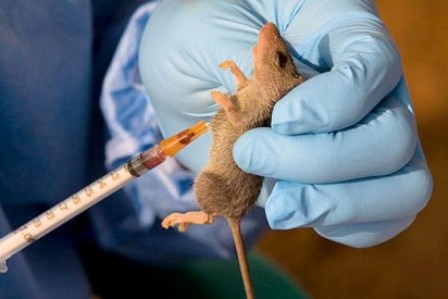
Nigeria records 5 new cases of Lassa fever
-
Confirmed in Bauchi, Gombe, Plateau and Rivers States
-
WHO expert committee releases updates from affected countries
ABUJA – Five confirmed cases of Lassa Fever have been reported from four states of Nigeria within the week 24th August to 2nd September.
A statement from the Nigeria Centre for Disease Control (NCDC) said two cases were reported from Plateau State, one from Rivers, and one each from Bauchi and Gombe. The case reported from Gombe died on 22nd August 2016 while all other cases are alive.
NCDC announced that public health response has commenced in all the affected states under leadership of the respective state’s Ministries of Health.
“Resources were immediately mobilised from the Nigeria Centre for Disease Control (NCDC) and its partner, the Nigerian Field Epidemiology and Laboratory Training Programme (NFELTP), to support the investigation and management of cases in the affected states.”
Dr. Chikwe Ihekweazu, the CEO of NCDC said: “We commend the early detection and reporting of the most recent cases, as it significantly improves the likelihood of survival for the cases and also reduces the risk of further transmission.
“We also urge all States to report cases immediately for Lassa fever while improving on the timeliness of their reporting generally”
As a result of increasing number of cases, the NCDC is issuing an advisory to all States reminding them of the steps they have to take to prepare and respond to cases of Lassa fever and other haemorragic fevers.
The NCDC report came amidst updates from the meetings of two separate Emergency Committee of the World Health Organisation (WHO) on Lassa Fever and Zika virus from affected countries.
Members of the Committee offered technical advice on immediate actions for the consideration of WHO and Member States in the following areas:
For affected countries:
- Further strengthening of surveillance and laboratory capacity, completion of mass vaccination, continuing risk communications, community mobilization, integrated vector control and case management measures.
- There should be thorough documentation of the operational aspects of the fractional dose campaign and sharing of interim results on the study on duration of immunity;
- Reinforcement of the need for yellow fever vaccination of all travellers, and especially migrant workers to and from areas with ongoing yellow fever virus activity.
Other advice:
- Strengthening of yellow fever vaccination as part of routine childhood immunization programmes where appropriate;
- The intensification of surveillance and preparedness activities, including verification of yellow fever vaccination in travellers, risk communications and strengthening of systematic cross border collaboration in at-risk countries, particularly countries having land borders with the affected countries;
About author

You might also like
Nigerian Hospitals depleted, healthcare in danger — APHPN President raises alarm
Worried by current economic hardship, the national President Of Association Of Public Health Physicians Of Nigeria (APHPN) Prof. Alphonsus Isara, has raised the alarm over rising cost of medicine, depletion
CSM situation report in states
… Zamfara leads with 2, 337 cases, 262 deaths As at April 5, 2017, Zamfara State reported the highest number of Cerebrospinal meningitis (CSM) cases, put at 2,337 with 262

Open defecation: Borehole makes a difference in Kano community
In far away Yammawah Kafawa, a fulani community in Dambata Local Government Area (LGA), of Kano State, at Northern Nigeria, there is no electricity for the children to watch Disney

0 Comments
No Comments Yet!
You can be first to comment this post!