


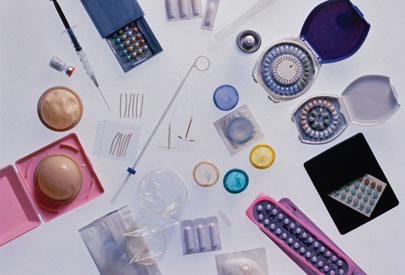
The Federal Government has assured it would lift the nation’s contraceptive prevalence rate, CPR (for family planning) from its present 10 percent to 36 percent in 2018.
Director of Child Health, Federal Ministry of Health Dr Bose Adeniran, gave the pledge recently at the Nigerian Urban Reproductive Health Initiative, NURHI, Phase One Project Dissemination in Abuja.
According to her, the Federal Government, in its effort to enhance availability and accessibility of contractive commodities in the country, gave a policy directive that family planning commodities should be distributed free in public health facilities in 2011. This, she said, was based on the premise that the Federal Government would be contributing $3million annually for the procurement of contraceptives.
“We said the women should have them free so that they will be able to plan their families…In addition to that, we’ve also gone ahead to develop a national Family Planning Blueprint. This is a costed strategy with implementation from 2014 to 2018. By 2018, we should have raised the contraceptive prevalence rate to 36 percent. Currently, from the NDHS we got in 2013, we are still at 10 percent. For us, we want to promote the wellbeing of the women; we want that to be 36 percent in 2018.
“This blueprint has been costed; a lot of money is required to do it. Government alone cannot do it. By so doing, government has set aside some money; we are also using it as advocacy tool to talk to our partners that are working in this area to help us mobilize resources for us to implement it,” she added.
Speaking with reporters on NURHI’s efforts on family planning in the country, Project Director for the organization, Mrs Mojisola Odeku, said the key findings of the first phase of the project showed that there was increase in modern contraceptive use in all big cities where the organization worked in the country.
The cities, according to her, are Abuja, Kaduna, Ilorin, Zaria, Benin city and Ibadan. “We worked with poor people in the slum areas in the cities. Over the years, what we have experienced was more or less like utilization because families, not just women, were not aware of the benefits of family planning, where to go for family planning, where they can get answers to some questions they have about family planning, and the providers were limited in the scope of the type of method they would provide.
“So, in these cities, providers were trained, both those who work with what we call clinical, which is the hospitals, or those who work in non-clinical, so that they can provide simple information to direct people to where they can get proper care. In these cities, we were able to link all of them together.
“We also made sure that where people do specific life events, we introduce the message of planning so that people get the message of family planning…Family planning is part of life. It lets you know that adopting the use of modern family method is not just beyond the health benefits, but it is life. It helps you contribute to the wellbeing of your family,” she stated.
She said the phase two of the programme would be scaling up in rural areas and pledged that the programme would be taken to more Nigerians in states where it is being implemented.
1 Comment

What’s Taking place i am new to this, I styumbled upon this
I’ve discovesred It absolutely helpful and it has helped mee out loads.
I’m hhoping to give a contribution & aid different customers like its
aided me. Good job. xnxx