

-
Renowned malariologist, Prof. Oyibo, blames the trend on poor diagnosis

Malaria has been found to be over-diagnosed and over-treated in health facilities and pharmacy shops in developing countries, especially Nigeria and Ghana.
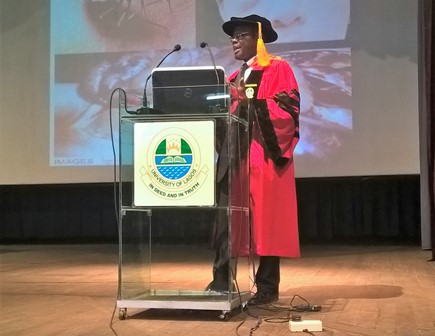
This revelation was made last Friday by Professor Wellington Aghoghovwia Oyibo of the Dept. of Medical Microbilogy & Parasitology, Faculty of Basic Medical Sciences, University of Lagos, when he delivered an inaugural lecture entitled: Parasitus Facultas Et Humanum Intelligentia: “The footprints of a Medical Parasitologist in the Neglected Tropical Parasitic Diseases and Malaria Landscape.”
Prof. Oyibo noted that over-diagnosis and over-treatment of malaria are common in the developing countries, especially in Nigeria and Ghana due to the absence of effective diagnosis. According to him, the place of effective diagnosis in malaria case management and the need to explore factors that limits the performance or use of malaria rapid diagnostic test (RDT) in diverse geographic settings have become critical in ensuring early diagnosis and treatment of malaria.
“Clinical diagnosis of malaria based on symptoms is not specific and therefore results in the over-diagnosis and overtreatment of malaria. One of our studies showed that less than 8% over-diagnostic/ treatment in children less than 12 years old that presented with fever in Lagos, Nigeria.
“We again recorded a 90% malaria overtreatment among clients, 20 years and above who purchased ACTs from medicine retailers in six states of the country. Another study in a Secondary Health facility in Ghana also indicated over-diagnosis and overtreatment of malaria,” Prof Oyibo disclosed.
He however, noted a shift in malaria prevalence from under-fives to above such as five to 12 year age group. “Until recently, malaria occurs more in the under-five year-old children and this brought about the strong attention to prioritize their protection with available interventions.
“Though most deaths occur in children under five years, the evidence of a shift in malaria prevalence both in community and facility-based studies are beginning to emerge,” he said.
Noteworthy are some of other footprints Prof. Oyibo made to knowledge, practice and innovation while delivering the lecture. According to him, he made the following contributions in the area of river blindness such as the efficacy, safety, and tolerability of ivermectin in river blindness control in Nigerian population; successful control of river blindness which is dependent on high annual acceptance and compliance with annual treatment with ivermectin; blinding and non- blinding strains of Onchocerca volvulus in a Forest-Savanna Mosaic area of Kwara State, Nigeria among other contributions in malaria.
However, while recorgnising the unfolding reduction in malaria prevalence of about 40 countries including Nigeria, and elimination in several countries as a positive sign, he said the momentum must be stepped-up and sustained. In-country, “we can use “our knowledge” in resolving our NTDs’ and malaria challenges with cost-effective innovations and strategies so we can celebrate our successes.
“I have today described my signature in the NTDs and malaria landscape and indications that the operational space for the parasites to disturb our peace is closing up. Humans have the capacity to deploy multidisciplinary preventive, defensive and offensive measures to effectively frustrate the NTDs and malaria parasites’ opportunities and capabilities of invading or harming humans.
“Already referred to as “uninvited guests” I add to our descriptive lexicon that parasites are “Personae non gratae” to humans and in no distant time, their “stronghold” of diseases and poverty in man would be irreversibly broken going forward with our pre elimination/elimination/eradication agenda,” Prof. Oyibo predicted.
