

By
Alex Aiayi-Bembe, Edinburg, Texas, USA
Growing old is one of life’s certainties. We are born, grow into adulthood, raise families, become grandparents and, eventually, prepare for the final stage of life. Yet how people experience ageing depends greatly on the society in which they live.
Life cycle, as we know it, is shaped by many variables including race, ethnicity, culture, tradition, heritage, beliefs and myths. And in recent times, modernization, development, migration, cross cultural factors and the almighty technology. These factors shape the individual societies, countries and cultures.
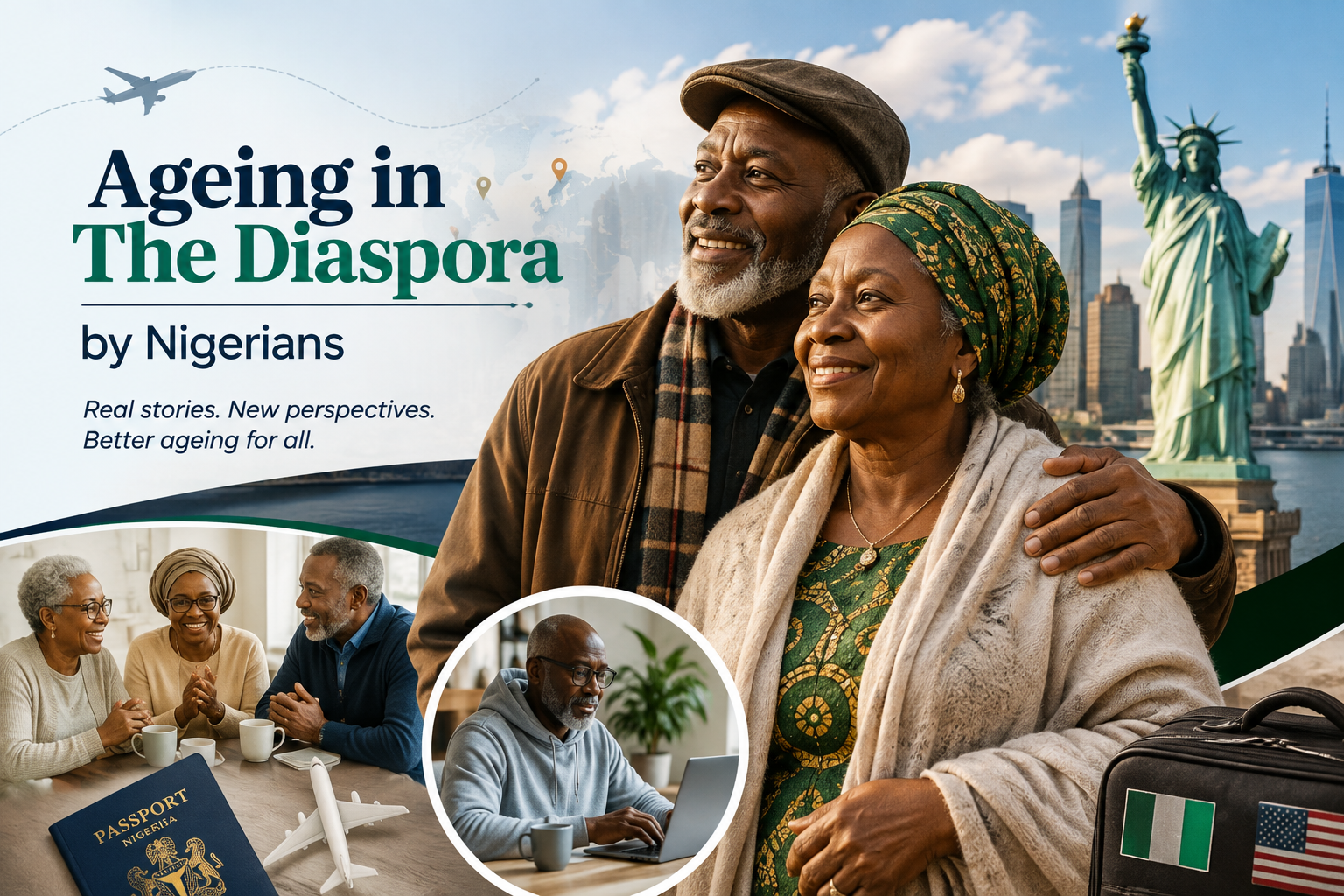
The second article by Sam Eferaro in the Healthy Ageing Series shared “How we treat our elders in Nigeria” and this exposé will share how Nigerians in the diaspora (especially in the US) treat our elders blending our culture with the laws of the land.
In the US, many policies impact the variables that shape how the elderly are treated. The government recognizes the importance and the fragility of the elderly a.k.a. senior citizens hence systems, policies and laws exist to protect them (I will use senior citizens and grandparents interchangeably).
Let me make a vital disclosure and comparison here. The American society, predominantly white, does not have the same close knit strong family support system that exist in Nigeria or other African countries, in which we keep our senior citizens with the family unit until they pass on. So long as there is a living adult-child or close relative, the grandparents will continue to be part of that household, in Nigeria.
In the American society, they have various programs like Nursing homes (for senior citizens who have major health challenges) and Assisted Living facilities for semi-independent senior citizens. There are many other programs for senior citizens who are still very active with no health issues.
Oftentimes, the children will be the ones that will take their parents to these facilities because “everybody is busy” and they can’t take care of the grandparents. The children visit the parents at random and during major holidays, birthdays and anniversaries.
In these facilities, they get medical/nursing care and are taken care of by staffers. This is paid for by Medicaid and Medicare insurance, which most people had contributed to while working.
In the African American and Hispanic communities, majority of their senior citizens remain with their families just like the in Nigeria, although that trend has changed over a few decades.
There is also another category in the US. For the extremely wealthy, they stay in luxurious homes and have a fleet of staff including a butler, a maid, a cook, and a driver. This group usually has more dedicated children and has more attention because they are wealthy, the children are benefiting from them and there is huge inheritance when they pass on.
Where do Nigerian senior citizens fall in the scheme of things, you might want to ask? Well, the answer to that will be in the next article. Remember, these are just the general scenarios. There will be many variations.
I challenge you to guess where the Nigerian senior citizens fit in in the grand scheme of things.

Ageing in the Diaspora by Alex Aiayi-Bembe is a regular weekly column under our Healthy Ageing Project, a collaborative platform on healthy ageing and longevity, with Healhtimes Communications Nigeria Limited serving as the interim administrative host
