

-
Under-five mortality remains high at 102%
-
Only 49% of children delivered in health facility
-
51% of children delivered by skilled birth attendant in Nigeria- UNICEF

UNICEF Lagos Field Officer
Medical experts have identified poor health seeking behaviour of expectant and nursing mothers as one of the top factors contributing to the preventable deaths of under-five children in Nigeria.
This is despite the fact that the first 1000 days, a period between a woman’s pregnancy and her child’s second birthday play a big role by presenting opportunities for optimum health and development of a child.
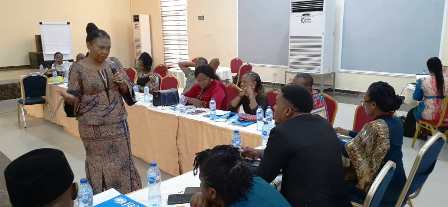
UNICEF Nutrition Specialist, Mrs. Ada Ezeogu, while speaking at a UNICEF and National Orientation Agency, NOA organized advocacy meeting with the media programme in Lagos, said that children in Nigeria have continue to die from preventable causes of death including pneumonia, malaria, diarrhoea and measles among others.
According to her, “All of these are influenced by poor health seeking behaviour of health care, infectious diseases, nutrition and hygiene of the pregnant mother and child during the first 1000 days.
“Neonatal deaths account for nearly 40 per cent of overall deaths of children under the age of 5. While access to prevention of mother to child transmission of HIV (PMTCT) services is nearly universal, retention in care, poor infant feeding practices, as well as challenges with immunization coverage continue to jeopardize the health and development of babies and young children.”
Speaking further on unideal behaviours that lead to mortality, Ezeogu regretted that most of the Nigerian women don’t seek maternal assistance from an institutionalized healthcare facility.
Even from UNICEF’s statistics currently, under-5 mortality rate in Nigeria is at 102. Also, only 49 percent of the children in Nigeria are delivered in the institutionalized health facilities.
In South West, over 21 percent of children are born outside the health facilities in the South West, while Lagos had the highest average with 87 percent and it is even lowest in Ondo and Ogun with 71 percent respectively. Meanwhile, Oyo, Osun and Ekiti had 75, 80, 78 respectively.
Similarly, only 51 percent of children are delivered by skilled birth attendants. Also, in the South West, Lagos had the highest skilled birth by attendant with 91 percent whereas Ondo had the lowest with 60 percent.
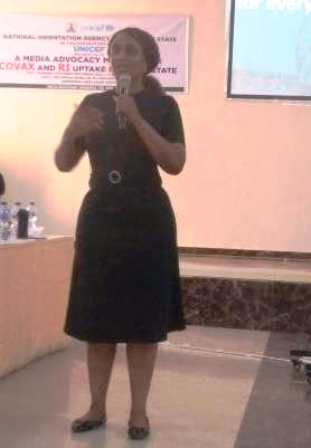
Speaking in the same vein, UNICEF Lagos Field Officer, Mrs. Ijeoma Agbo noted that good nutrition and hygiene play an important role in the life of a pregnant mother and child during the first 1000 days.
Agbo said: “The right nutrition for the mother and for the child during this time can have a profound impact on the child’s growth and development and reduce disease risk, as well as protect the mother’s health.
“Undernutrition during pregnancy, affecting fetal growth, is a major determinant of stunting and can lead to consequences such as obesity and nutrition-related non-communicable diseases in adulthood. “Focusing multi-sectoral nutrition efforts on evidence-informed interventions targeting this critical window can have lasting implications across the lifecycle.
“The combination of good health and reduced disease risk for both mothers and their children can also have a powerful, lasting effect on a country’s prosperity.”
