
How we solved problem of ‘Out of Stock’ syndrome in UBTH – Chief Pharmacist
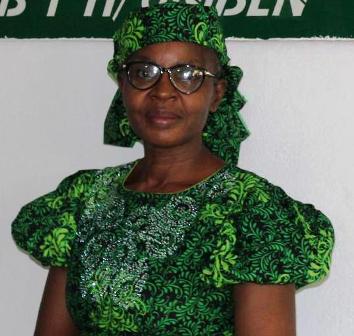
The Head of Pharmacy, University of Benin Teaching Hospital, (UBTH), Dr. Caroline Olumese says the common problem of ‘Out of Stock’ (OS) syndrome in Nigerian hospitals is no longer an acceptable standard in modern health care delivery system and advised hospitals still experiencing it to devise a means of eliminating it within the shortest possible time.
Speaking to journalists on a facility tour of the hospital recently, Dr. Olumese said patients should always take it for granted that they will always be supplied with their medicines and other items required for the management of their ailments whenever they visit the hospital.
“We should never tell patients there are no drugs,” she emphasized.
She told the visiting journalists that UBTH has, since the inception of the current management, developed a policy of 100 percent availability of drugs adding that it is no longer permitted for any staff to tell patients to source their drugs from anywhere else apart from the hospital pharmacy.
“Management came up with this policy of ‘100 percent Availability of Drugs’, even up to soap for people with skin problem. If there’s nothing, the onus lies on me (as the Chief Pharmacist), to bring out the money and we buy the thing. This is called 100 percent availability policy by our amiable CMD,” she said.
Dr. Olumese disclosed that the current management under the leadership of Prof. Darlington Obaseki had to come up with some innovative measures aimed at ensuring the hospital never runs out of drugs or experience the ‘OS” syndrome again.
According to her, the UBTH has three major divisions in it’s pharmacy department – The patient services, the drugs and special projects which work together to ensure a continuous and regular supply of drugs to patients.
“We have good coordination. The most important thing is the availability of drugs. That’s the mission and vision statement, to ensure we provide quality drugs to our patients.
“How we do it? Procurement comes in here. We have the tenders process and we also have the direct purchase from the reliable companies. Then we have the emergency purchase for impress.
”This management has been very cooperative with us and they ensure that we don’t have any out of stock, that’s why we have impress so if a particular drug is not in stock we simply buy from impress instead of telling the patient to go and look for it,” she said
The pharmacy department also compounds and produces some of its medications.
“The drug in front of you is one of our products,” she told the journalists.
“There are some drugs you cannot get outside, they come in tablet form and the pediatrics need it, it is only we that can reformulate for the doctor’s use.
“Another area is our oncology. During this regime we established our own oncology pharmacy and we were able to get some companies to give us biosafety cabinet. One is more than N2 million and right now we have two.
“We were able to reduce cost and help patients save money as we now reformulate instead of allowing wastage. There’s a way we do it so that three cancer patients can use that same drug instead of buying one each.”
Dr. Olumese disclosed that some teaching hospitals are already adopting the UBTH method and urged others to follow suit so that the problem of ‘out of stock’ syndrome will be eliminated from Nigeria’s health care delivery system for good.
About author

You might also like

GE Healthcare collaborates with Kenya Cardiac Society to train cardiac health professionals
(L-R) President, Kenya Cardiac Society Dr. Bernard Gitura and the CEO, GE Healthcare East Africa, Andrew Waititu signing the agreement NAIROBI, KENYA – General Electric (GE) a leading provider of

A Billion People at Risk from Uncontrolled Hypertension, New WHO Shows
The World Health Organization (WHO) today released its second Global Hypertension Report, showing that 1.4 billion people lived with hypertension in 2024, yet just over one in five have it


Reproductive health expert predicts unplanned baby boom from November
as COVID-19 hinders access to family planning in midst of knockdown A Reproductive Health expert has predicted that Nigeria will begin to see unplanned COVID-19 babies from November 2020. As

0 Comments
No Comments Yet!
You can be first to comment this post!