
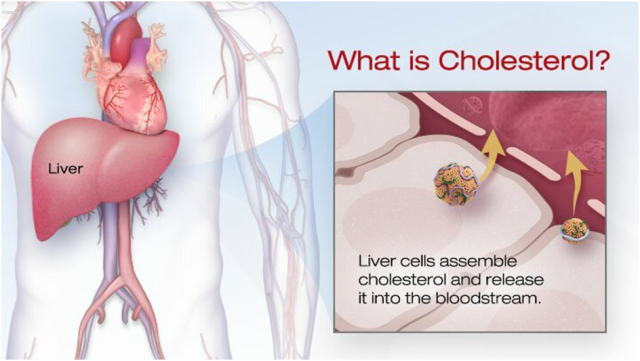
Measuring your Cholesterol
Cholesterol is a waxy substance produced and released into the bloodstream by cells in the liver. The body uses cholesterol to form cell membranes, aid in digestion, convert Vitamin D in the skin and develop hormones. Your body makes cholesterol. You get cholesterol from animal products like meat, dairy foods, and eggs. Cholesterol is a type of lipid, just as fats are. However, unlike fat, cholesterol can’t be exercised off, sweated out, or burned for energy. Cholesterol is stored inside a waterproof envelope of lipids (fat), along with specific proteins that weave in and out of the envelope’s outer shell. These particles are called lipoproteins.
While there are several types of lipoproteins, your cholesterol score measures just two:

Low density lipoproteins (LDL) are considered “bad” cholesterol. While they carry needed cholesterol to all parts of the body, too much LDL in the system can lead to coronary artery disease, due to the buildup of LDL deposits in the artery walls.
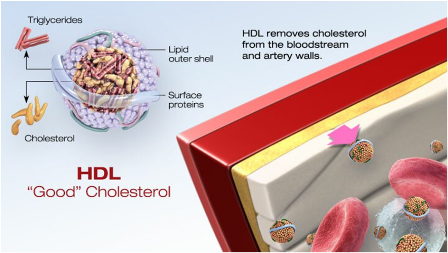
High density lipoproteins (HDL) are called “good” cholesterol because they remove cholesterol from the bloodstream and the artery walls. A higher HDL score is desirable and will improve your overall cholesterol score.
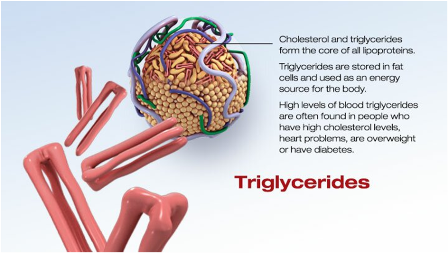
Triglycerides are a type of fat that is packaged with cholesterol when the lipoproteins form in the liver cells. Triglycerides are stored in fat all over the body and can be an energy source, like carbohydrates. Your cholesterol scores will show a measurement for triglycerides. A score higher than normal may mean you have a higher chance of developing coronary artery disease.
KNOW YOUR CHOLESTEROL SCORE:
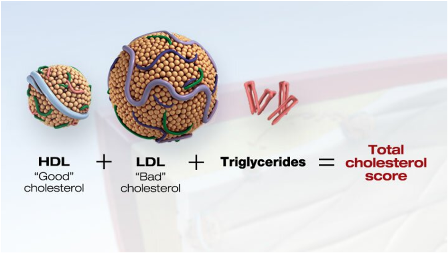
Source: American Heart Association
About author

You might also like

Chevron intensifies partnership with Lagos government on healthcare
… donates ambulance, refurbishes General Hospital ward Chevron, Nigeria’s third-largest oil producer, Tuesday intensified its partnership with the Lagos state government on health care delivery, as it handed over to

LASUTH records Monkeypox case
Shuts unit, places health workers under observation A 40-year-old patient on admission at the Lagos State University Teaching Hospital, LASUTH, has tested positive for the Monkeypox virus even as the


Gold rush: Over 850,000 at risk of mercury poisoning
ABUJA – No fewer than 850,000 people are at risk of mercury poisoning in 12 states of Nigeria where people are involved in small-scale gold mining, experts at a one-day

0 Comments
No Comments Yet!
You can be first to comment this post!