


Malaria death rates have plunged by 60% since 2000, translating into 6.2 million lives saved, the vast majority of them children, according to a joint WHO-UNICEF report released Thursday.
The report – “Achieving the malaria MDG target” – shows that the malaria MDG target to “have halted and begun to reverse the incidence” of malaria by 2015, has been met “convincingly”, with new malaria cases dropping by 37% in 15 years.
“Global malaria control is one of the great public health success stories of the past 15 years,” said Dr. Margaret Chan, Director-General of WHO. “It’s a sign that our strategies are on target, and that we can beat this ancient killer, which still claims hundreds of thousands of lives, mostly children, each year.”
According to the report, an increasing number of countries are on the verge of eliminating malaria. In 2014, 13 countries reported zero cases of the disease and 6 countries reported fewer than 10 cases. The fastest decreases were seen in the Caucasus and Central Asia, which reported zero cases in 2014, and in Eastern Asia.
However, the report says despite tremendous progress, malaria remains an acute public health problem in many regions. In 2015 alone, there were an estimated 214 million new cases of malaria, and approximately 438 000 people died of this preventable and treatable disease. About 3.2 billion people – almost half of the world’s population – are at risk of malaria.
Some countries continue to carry a disproportionately high share of the global malaria burden. Fifteen countries, mainly in sub-Saharan Africa, accounted for 80% of malaria cases and 78% of deaths globally in 2015.
Children under 5 account for more than two-thirds of all deaths associated with malaria. Between 2000 and 2015, the under 5 malaria death rate fell by 65% or an estimated 5.9 million child lives saved.
“Malaria kills mostly young children, especially those living in the poorest and most remote places. So the best way to celebrate global progress in the fight against it is to recommit ourselves to reaching and treating them,” said UNICEF Executive Director Anthony Lake. “We know how to prevent and treat malaria. Since we can do it, we must.”
Research
WHO also reports that new research from the Malaria Atlas Project – a WHO Collaborating Centre based at the University of Oxford – has shown that ITNs have been by “far the most important intervention” across Africa, accounting for an estimated 68% of malaria cases prevented since 2000. ACTs and indoor residual spraying contributed to 22% and 10% of cases prevented, respectively. The research, published last week in the journal Nature, provides strong support for increasing access to these core interventions in post-2015 malaria control strategies.
Other key findings from the report
In 2015, 89% of all malaria cases and 91% of deaths were in sub-Saharan Africa.
• Of the 106 countries and territories with malaria transmission in 2000, 102 are projected to reverse the incidence of malaria by the end of 2015.
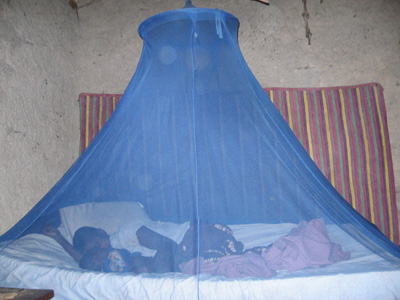
• Between 2000 and 2015, the proportion of children under 5 sleeping under an ITN in sub-Saharan Africa increased from less than 2% to an estimated 68%.
• 1 in 4 children in sub-Saharan Africa still lives in a household with no ITN and no protection provided by indoor residual spraying.
In 2015, only an estimated 13% of children with a fever in sub-Saharan Africa received an ACT.
Source: WHO
Leave a Comment
