
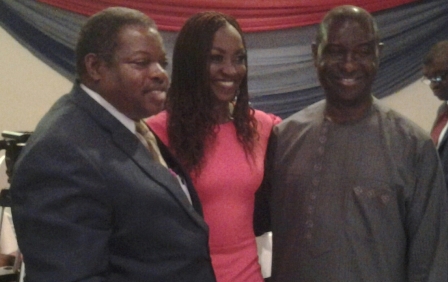


A professor of paediatrics, Olugbenga Mokuolu wants Nigerians to adopt a change of attitude towards malaria and see it as a fatal disease that it is instead of under-estimating it as “common malaria,” as it is often referred to in the country.
In a presentation at a dinner with health editors organised by the Society for Family Health (SFHl) today in Lagos, Prof. Mokuolu who is also the Director, Unilorin Consultancy Service Centre, University of Ilorin, described malaria as a serious disease which can often be fatal.
According to him, even with the global reduction of malaria incidence globally, the World Health Organization reports that no fewer than 214 million cases are still being reported worldwide annually. Not only that, malaria is also responsible for about 438,000 deaths annually at the global level.
Prof. Mokuolu noted that about 90% of the global cases and death are reported from Africa, “specifically the sub-Sahara Africa.” Also, he disclosed, Nigeria accounts for one third of global malaria deaths.
Financially, experts working with public health NGO, The Society for Family Health report that Nigeria loses about three billion US dollars to malaria yearly due to out of pocket treatment and prevention costs, an amount they noted, could pay the annual salaries of 2.2 million Nigerians on minimum wage.
In socio-economics, malaria is also “a major cause of absenteeism in schools, offices and markets, and affects the national economy,” according to the experts.
The health costs are also high. Malaria accounts for about six out of 10 out-patient visits and three of 10 admissions in healthcare facilities. They further state that malaria accounts for 11% of maternal mortality and three of 10 deaths in children less than five years.
With malaria, SFH says, ignorance is deadly. Studies by the organisation that works in several areas of public health show that a significant contributor to malaria’s deadly count in Nigeria is inadequate knowledge and information on the part of caregivers and the citizenry.
SFH states that “caregivers are inadequately empowered with appropriate health education to change their behaviour and use of malaria commodities” with consequences for prevention and treatment of the ailment.
Only two of 10 caregivers use Artemisinin Combination Therapy, the gold standard, to treat malaria in children under five years. Only three out of 10 children received treatment within 24 hours when they had malaria.
Even with the treatment, the statistics show that only one out of 20 children were tested before treatment. The situation was the same with adults.
On the part of citizens, even as there is high awareness about the causes of malaria (mosquito bites), less than half of all households own recommended Long Lasting Insecticide Nets. Even worse, only 35% of family members slept inside LLIN nets where available.
Also speaking at the dinner, the Managing Director of SFH, Mr. Bright Ekweremadu said the goal of the Global Fund’s New Funding Model (GFM NEM), is to reduce malaria burden to pre-elimination levels and bring malaria-related mortality to zero by 2020. The Fund also aims to provide at least 80% of targeted population with appropriate preventive measures by 2020; test all care-seeking persons with suspected malaria using Rapid Diagnostic Test (RDT) or microscopy by 2020 and treat all individuals with confirmed malaria seen in private or public facilities with the effective anti-malarial drug by that year.
Also, GFM NEM, according to Ekweremadu also aims at providing adequate information to all Nigerians such that at least 80% of the populace habitually take appropriate malaria preventive and treatment measures as necessary by 2020 while ensuring the timely availability of appropriate anti-malarial medicines and commodities required for prevention and treatment of malaria in Nigeria, wherever they are needed by 2018 and sustained through to 2020,amongst others.
He told the heath editors that SFH is working towards the achievement of the GFM NEM goals by providing uninterrupted distribution of Long Lasting Insecticidal Nets (LLINs) and treatment through delivery of high quality Artemisinin-based Combination Therapy (ACT).
Other SFH service delivery include: diagnosis through the distribution of RDT, Intermittent Preventive Treatment in pregnancy (IPTp), Behaviour Change Communication (BCC) to build knowledge and create awareness, and Health Systems Strengthening through capacity building and support to Monitoring and Evaluation (M&E).
“Because we acknowledge the profound power of the media, we had always partnered, and work with and through the press, to reach the teaming population of vulnerable Nigerians in far-flung places.
“That is why we are gathered here this evening to continue to deepen our relationship with you all. Media editors, as strategic gate-keepers, are key to information dissemination everywhere in the world.
“It is our belief however that it is best to equip the media with the right and correct information (particularly in health related areas) to be able to provide such information,” Ekweremadu further said.
