

Africa CDC reports 5,656 cases and 2,715 deaths in DRC as community action, faster diagnosis and research offer hope
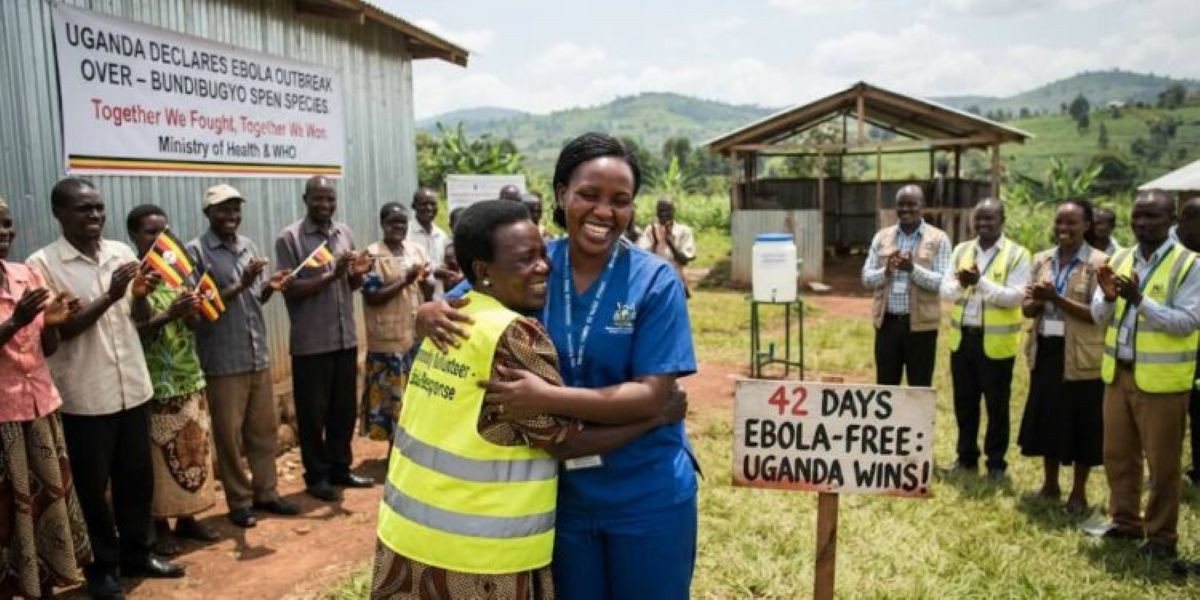
Uganda has officially ended its Ebola outbreak after completing 42 consecutive days without a new confirmed case, even as the Democratic Republic of the Congo (DRC) battles a rapidly expanding outbreak that has now spread to 58 health zones.
The contrasting situations were highlighted during an Africa Centres for Disease Control and Prevention (Africa CDC) press briefing, where updates on the continent’s major health emergencies were presented by Professor Yap Boum.
Uganda’s achievement has been welcomed by the Africa CDC and the World Health Organization (WHO) as evidence of what decisive leadership, early detection, effective surveillance and strong community engagement can accomplish in containing Ebola.
Uganda’s last patient, an imported case, was discharged from care on 16 July 2026. The country subsequently maintained intensive surveillance and outbreak-control measures before completing the additional 42-day period without detecting further transmission.
The 42-day period, twice the upper limit of Ebola’s incubation period, is the internationally recognised benchmark for declaring that transmission associated with an outbreak has ended.
WHO Director-General, Dr Tedros Adhanom Ghebreyesus, said Uganda had demonstrated that Ebola outbreaks could be brought under control quickly when countries act decisively.
“Uganda has demonstrated that with decisive action, Ebola outbreaks can be brought under control quickly,” Tedros said.
He identified preparedness, surveillance capable of detecting potential cases in health facilities and communities, and careful management of points of entry as important measures for protecting populations while allowing people and goods to move.
Uganda’s rapid response
Uganda declared its Ebola outbreak on 15 May 2026 after confirming cases of Ebola disease caused by the Bundibugyo virus.
The country recorded 20 confirmed cases, of which 15 were imported from the DRC and five were locally acquired among contacts and health workers linked to the imported cases.
Eighteen people recovered while two died, while more than 800 contacts were identified and monitored.
According to WHO and Africa CDC, transmission was interrupted through early detection and confirmation, contact tracing, isolation and clinical care, infection prevention and control, community engagement and strengthened surveillance at health facilities and points of entry.
Africa CDC Director-General, H.E. Dr Jean Kaseya, described Uganda’s achievement as an important lesson for the continent.
“Uganda has shown that Ebola can be stopped when leadership acts decisively, communities are trusted and public health systems reach people quickly,” Kaseya said.
DRC outbreak accelerates
While Uganda has brought its outbreak under control, the situation in neighbouring DRC remains deeply concerning.

Prof. Yap Boum, who stood in for the Africa CDC Director-General at this Week Press briefing, said the DRC had recorded 5,656 cumulative cases and 2,715 deaths, with the outbreak now affecting 58 health zones.
The scale and speed of the outbreak have made it particularly worrying for the continent.
According to the Africa CDC briefing, the outbreak has expanded considerably from the three health zones initially affected, reaching several provinces, including Ituri, North Kivu and South Kivu.
Prof. Boum said the DRC outbreak was currently the fastest-growing Ebola epidemic in Africa, with its cumulative cases and deaths exceeding those recorded at a comparable point during the major West African Ebola epidemic of 2014–2016.
Despite the alarming figures, there are signs that transmission can be brought under control in some areas.
Four health zones have entered the control phase, with some recording more than 42 days without a reported case. Five additional health zones have gone beyond 21 days without a new case, although they have yet to reach the 42-day threshold.
Communities at the centre of response
Prof. Boum said community engagement was proving critical to the DRC response, particularly because community deaths remained a major concern.
For the latest 14-day period discussed during the briefing, community deaths accounted for 63 per cent of reported deaths. However, the proportion had fallen to between 48 and 51 per cent during the most recent two days.
The decline, he said, was partly associated with increased community engagement and efforts to strengthen links between communities and Ebola treatment centres.
The response is now adopting a village-centre model, involving households, villages and health areas.
Village chiefs, women’s groups, youth groups and other community actors are being incorporated into the response, including efforts to strengthen alerts and ensure safe and dignified burials.
In Bunia, leaders representing more than 50 villages exposed to Ebola signed an “Act of Engagement”, committing themselves to supporting the response.
The approach is designed to increase community ownership and encourage people to report suspected cases and deaths quickly.
Faster diagnosis, more treatment capacity
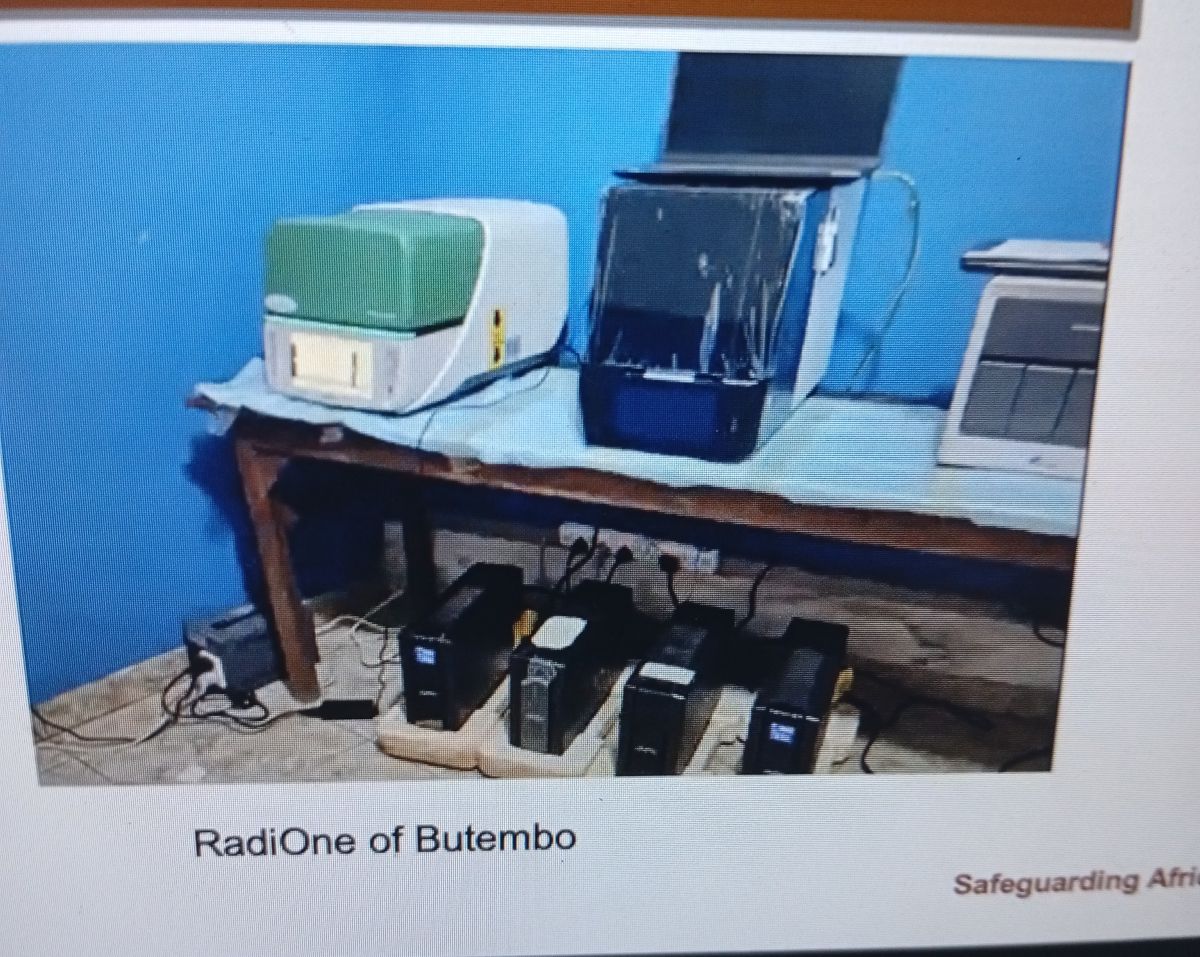
The DRC is also expanding laboratory capacity to reduce delays between detection and confirmation of suspected Ebola cases.
Prof. Boum reported that three additional laboratories had been established in the newly affected province of Bawele, alongside additional laboratory capacity in Butembo, North Kivu.
The number of RADI-1 diagnostic units has also increased to 48, supporting decentralised testing alongside conventional real-time PCR laboratories.
The expanded capacity is expected to facilitate earlier confirmation of cases, quicker access to treatment and more rapid identification of people who test negative for Ebola so they can receive appropriate care for other illnesses.
Treatment capacity has also increased, with bed capacity rising by 40.8 per cent since July, according to the Africa CDC briefing.
Increasing access to treatment centres closer to affected communities is also helping to build trust, particularly where families are able to maintain contact with relatives receiving care while observing appropriate safety measures.
Protecting routine healthcare
Prof. Boum also drew attention to the impact of the Ebola response on other essential health services.
Communities in affected areas have reported that while substantial resources are being directed towards Ebola, access to routine healthcare is declining.
The briefing highlighted reductions in maternal health services, vaccination and routine consultations in some affected communities.
Measles vaccination has also been affected in at least one area, raising concern that disruption of routine immunisation could create conditions for other outbreaks even while Ebola is being brought under control.
The Africa CDC therefore stressed the need to address the Ebola emergency alongside humanitarian and routine healthcare needs, particularly in areas hosting internally displaced populations.
Research offers hope
Research is also playing an increasingly important role in the DRC response.
Prof. Boum said a therapeutic trial had enrolled 274 people, while research into post-exposure prophylaxis using ObelisCV was continuing.
The studies are expected to generate evidence on the effectiveness of potential interventions, including Remdesivir, MDP134 and ObelisCV.
Preventive vaccination and vaccine research are also being pursued, with efforts under way to strengthen coordination among research partners under the leadership of the DRC Ministry of Health.
Cross-border threat remains
Uganda’s success does not mean the wider regional threat has disappeared.
WHO has noted that Uganda and the DRC have close social and economic ties, with frequent population movement and cross-border trade creating opportunities for imported infections.
Africa CDC Director-General Kaseya has stressed that Uganda’s achievement must be protected even as the response in the DRC is accelerated.
“We will only be secure when transmission is stopped everywhere,” he said.
WHO continues to advise against blanket travel and trade restrictions in response to Ebola outbreaks. It does not recommend suspending flights, closing borders or denying entry to travellers from affected countries.
Instead, countries are encouraged to maintain travel and trade while implementing proportionate public health measures that support early detection, preparedness and cross-border collaboration.
A lesson for Africa
The contrasting experiences of Uganda and the DRC offer a powerful lesson for African countries.
Uganda’s success demonstrates what can be achieved when cases are detected quickly, contacts are traced, patients are isolated and treated, communities are engaged and surveillance remains strong until transmission has genuinely ended.
The DRC experience, meanwhile, illustrates how quickly an outbreak can expand when it occurs in a setting complicated by population displacement, difficult access, cross-border movement and disruption of essential health services.
For Africa, the message is clear: preparedness cannot begin after an outbreak has already spread.
Strong disease surveillance, functional laboratories, trained health workers, trusted community structures, rapid response capacity and sustained investment in health systems are essential to preventing local outbreaks from becoming regional emergencies.
Uganda may have completed its Ebola journey, but until transmission is brought under control in the DRC and preparedness is strengthened across the continent, Ebola remains a major African health security concern.
