


The Federal Government has placed Lagos State, the Federal Capital Territory (FCT), and 19 other states on heightened Ebola surveillance following the rapid spread of the disease in parts of East and Central Africa.
The Nigeria Centre for Disease Control and Prevention (NCDC) announced the measure as health authorities intensify efforts to prevent the importation of the deadly virus into Nigeria.
According to the NCDC, the states assessed as being at the highest risk include Lagos, Rivers, Kano, Enugu, Borno, Akwa Ibom, Cross River, Taraba, Adamawa and the FCT, owing to their international airports, busy commercial activities, porous borders and high population movement.
States classified as having moderate risk include Ogun, Nasarawa, Kaduna, Plateau, Kogi, Niger, Jigawa, Katsina, Bauchi, Ebonyi, Abia and Bayelsa.
Speaking on the development, Director-General of the NCDC, Dr. Jide Idris, said Nigeria has not recorded any confirmed Ebola case linked to the ongoing outbreak but stressed that the country cannot afford complacency.
“The risk of Ebola importation into Nigeria is high because of international travel, regional population movement, porous borders and extensive trade networks,” he said.
The latest risk classification followed a dynamic assessment conducted by the NCDC in response to the evolving Ebola outbreak in the Democratic Republic of the Congo (DRC) and Uganda.
The agency said the outbreak has continued to expand, raising concerns about cross-border transmission and necessitating stronger preparedness measures across Nigeria.
Dr. Idris noted that Ebola symptoms in the early stages often resemble those of malaria, typhoid fever and Lassa fever, increasing the risk of delayed diagnosis if healthcare workers are not vigilant.
He explained that the current outbreak involves the Bundibugyo strain of the Ebola virus, a relatively rare variant for which there is presently no licensed vaccine approved for widespread use.

Dr. Jide Idris
DG, NCDC
“Early detection, rapid isolation of suspected cases, prompt contact tracing and strict infection prevention and control measures remain our most effective tools,” he said.
The NCDC also emphasized that Ebola is not an airborne disease. The virus spreads primarily through direct contact with the blood, body fluids, organs or contaminated materials of an infected person, or through contact with infected animals.
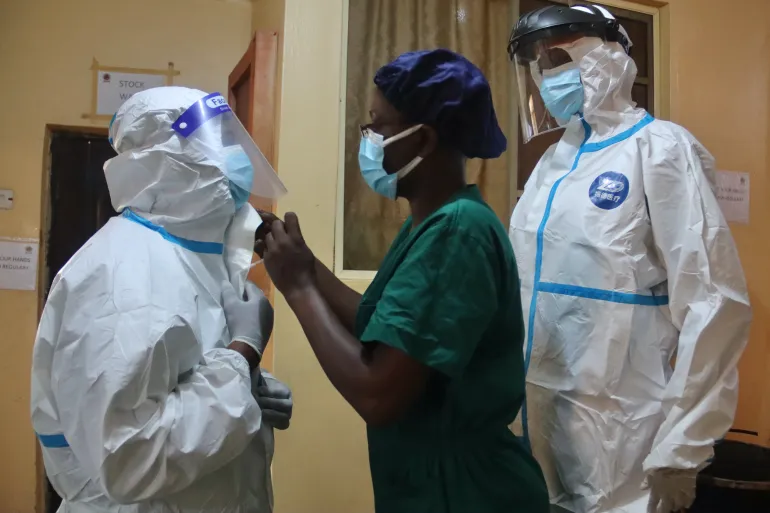
As part of preventive measures, state governments have been directed to activate emergency preparedness plans, strengthen disease surveillance at airports and border communities, identify and equip isolation facilities, and ensure frontline healthcare workers have adequate personal protective equipment.
States have also been instructed to submit readiness reports within 72 hours and immediately report any suspected Ebola case, unusual fever outbreak or high-risk exposure incident.
Nigeria’s response is informed by its successful containment of the 2014 Ebola outbreak, which began when an infected Liberian-American traveller arrived in Lagos. Through aggressive contact tracing, public education, rapid case management and coordinated public health action, Nigeria halted the outbreak and earned global recognition for its response.
EDITOR’s NOTE:
Ebola Virus Disease (EVD) is a severe viral illness spread through direct contact with infected body fluids. Early symptoms include fever, headache, weakness and muscle pain. Suspected cases should be reported immediately to health authorities.