
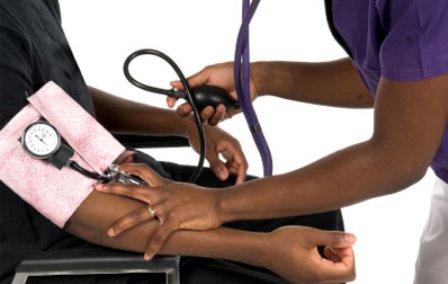
A Billion People at Risk from Uncontrolled Hypertension, New WHO Shows
The World Health Organization (WHO) today released its second Global Hypertension Report, showing that 1.4 billion people lived with hypertension in 2024, yet just over one in five have it under control either through medication or addressing modifiable health risks.
The new report – released at an event co-hosted by WHO, Bloomberg Philanthropies, and Resolve to Save Lives during the 80th United Nations General Assembly – also reveals that only 28% of low-income countries report that all WHO-recommended hypertension medicines are generally available in pharmacies or primary care facilities.
Hypertension is a leading cause of heart attack, stroke, chronic kidney disease, and dementia. It is both preventable and treatable – but without urgent action, millions of people will continue to die prematurely, and countries will face mounting economic losses. From 2011 to 2025, cardiovascular diseases – including hypertension – are projected to cost low- and middle-income countries approximately US$ 3.7 trillion, equivalent to around 2% of their combined GDP.
“Every hour, over 1000 lives are lost to strokes and heart attacks from high blood pressure, and most of these deaths are preventable,” said Dr Tedros Adhanom Ghebreyesus, WHO Director-General. “Countries have the tools to change this narrative. With political will, ongoing investment, and reforms to embed hypertension control in health services, we can save millions and ensure universal health coverage for all.”
“Uncontrolled high blood pressure claims more than 10 million lives every year, despite being both preventable and treatable. Countries that integrate hypertension care into universal health coverage and primary care are making real progress, but too many low- and middle-income countries are still left behind,” said Dr Kelly Henning, who leads the Bloomberg Philanthropies Public Health Program. “Strong policies that raise awareness and expand access to treatment are critical to reducing cardiovascular disease and preventable deaths.”
Persistent barriers
Analysis of data from 195 countries and territories shows that 99 of them have national hypertension control rates below 20%. The majority of the affected people live in low- and middle-income countries, where health systems face resource constraints.
The report highlights major gaps in hypertension prevention, diagnosis, treatment, and long-term care. Key barriers include weak health promotion policies (on risk factors such as alcohol, tobacco use, physical inactivity, salt, and trans fats), limited access to validated blood pressure devices, lack of standardized treatment protocols and trained primary care teams, unreliable supply chains and costly medicines, inadequate financial protection for patients, and insufficient information systems to monitor trends.
Access to medicines: a cornerstone of progress
Blood pressure medication is one of the most cost-effective public health tools. Yet only 7 out of 25 (28%) of low-income countries report general availability of all WHO-recommended medicines, compared to 93% of high-income countries. The report explores the barriers and strategies for improving access to hypertension medication through better regulatory systems, pricing and reimbursement, procurement and supply chain management, and improved prescribing and dispensing of these medicines.
“Safe, effective, low-cost medicines to control blood pressure exist, but far too many people can’t get them,” said Dr Tom Frieden, President & CEO, Resolve to Save Lives. “Closing that gap will save lives — and save billions of dollars every year.”
- Source: WHO
About author

You might also like
WHO raises alert on highly contagious meningitis outbreaks in African countries
The World Health Organisation (WHO) has raised the alert on Meningitis outbreaks in some African countries saying the outbreaks have become “an enormous public health threat.” Describing the outbreak in

FG begins PHC revitalisation
Buhari inaugurates Kuchigoro PHC Says vision is to revitalise 10,000 centres in phases To renovate one centre in each senatorial zone President Muhammadu Buhari kicked off the revitalisation of Primary

Lassa fever: Lagos calls for calm
LUTH confirms 3 cases on admission, says they are responding to treatment The Chief Medical Director of the Lagos University Teaching Hospital, Prof. Chris Bode, today confirmed that three out

0 Comments
No Comments Yet!
You can be first to comment this post!